
Becky Hodgkin
Welcome to Kindred Calling’s Artist Spotlight, a monthly feature where we get to know an artist whose work has caught my eye. This month Becky Hodgkin from Cardiff, in Wales, shares how she got started on her journey to creating her joyful colourful landscapes.

Chasing Light Exhibition | Becky Hodgkin Art |18 July 2026
Can you share a little about yourself and your art practice
I’m an artist and designer living in South Wales. I grew up in Hong Kong and moved to Cardiff for university, where I ended up building a life, a career and eventually a family. I trained as a graphic designer and now work full time as a senior brand manager for a global tech company, alongside being a mum to two young boys. For a long time, creativity existed mainly through design and illustration for me. Painting came much later. I started painting seriously in September 2025, after a summer where I’d begun to feel quite stuck. My life was full and happy, but also very predictable, and almost every part of my time belonged to work, parenting or responsibility. I realised I needed something that was simply mine — something where it would be okay if I failed, and if it succeeded, that success would belong to me too. Painting became that space. My work is mainly colourful, abstracted landscapes in acrylic. I’m interested in memory, colour, place, joy and increasingly the idea of belonging — particularly my own relationship with South Wales.
When was the point that you decided to take your art practice seriously?
Very specifically: September 2025. I’d actually been thinking about painting for around two years before I started. I would lose hours following artists online, researching techniques and disappearing down creative rabbit holes. I’d even researched things like how I was going to varnish paintings before I’d made my first one! During the summer of 2025, I was juggling full-time work, two young children and childcare, and I felt like I’d lost a little part of myself. I made a decision that as soon as the children went back to school and nursery in September, I was going to paint. The funny thing is that once I started, I found it incredibly frustrating because my taste was much further ahead than my ability. Around that time I began taking paint-along classes with artist Izzy Rossiter. She helped give me the technical confidence to turn all the things swirling around in my head into actual paintings. Less than a year later, Izzy and I held a joint exhibition together. It feels quite special that someone who helped me make some of my earliest paintings also helped welcome me into an art community.
How has your work changed over time?
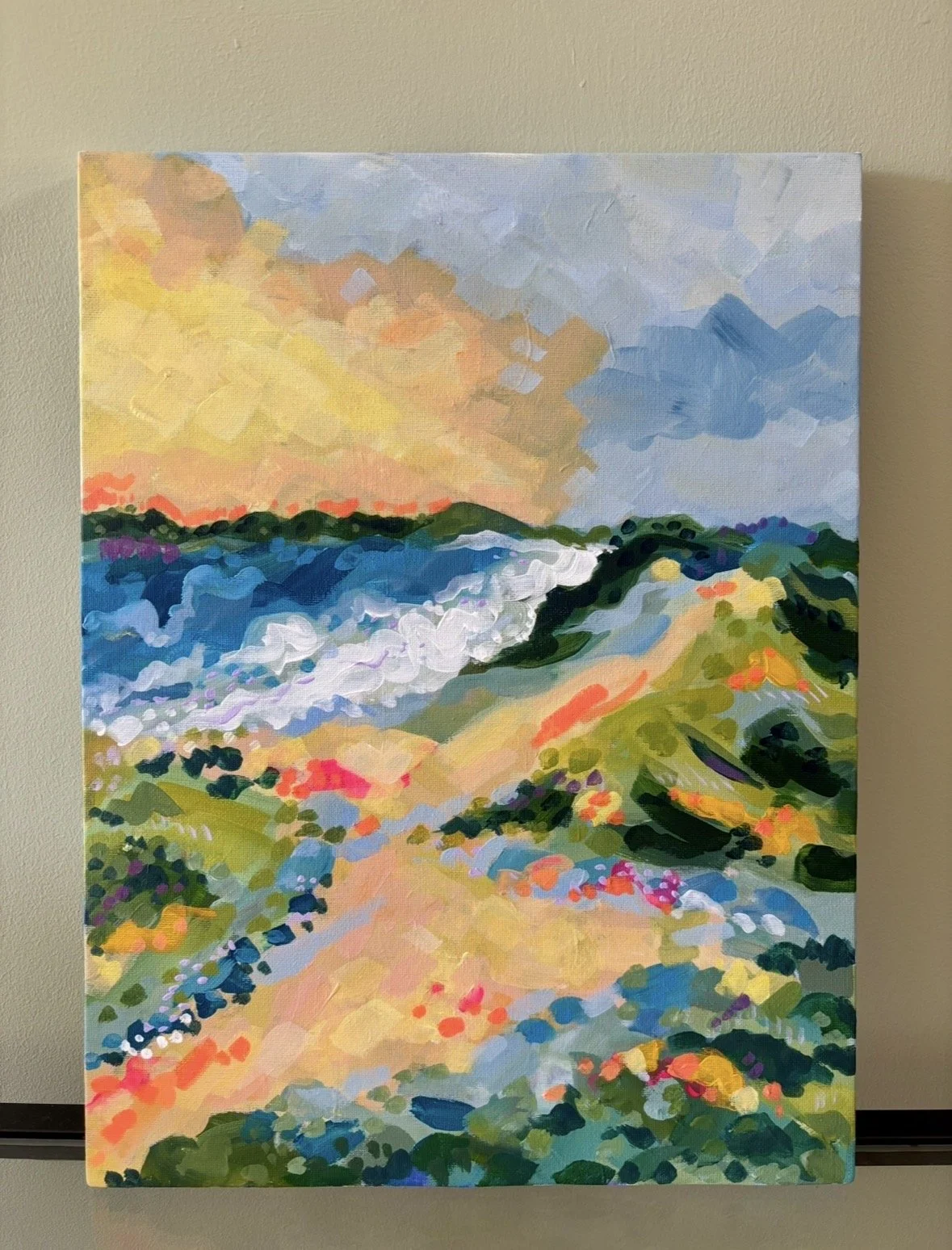
It’s all happened quite quickly because I’ve only been painting for about a year, but I can already see my own voice appearing. My earliest paintings were much more careful and conservative. I think I was trying to make things “correct”. When I was younger, I believed that good art needed to be technically or photographically accurate, and because I didn’t feel I had those skills, I assumed fine art wasn’t really for me. Now I’m much more interested in interpretation than accuracy. My landscapes have become looser, brighter and more stylised, and I’m much more willing to take risks. I’m also trying to unlearn perfectionism. I work quite quickly, and sometimes I wonder whether spending twice as long on a painting would make it twice as good. Increasingly I suspect the opposite might be true. There’s something about working fluidly, before I have time to second-guess myself, that feels very natural to me.
How do you balance your time in the studio with other commitments?
I’m a mum to two young boys and I work full time, so painting has had to fit into the life I already have rather than waiting for the perfect conditions. I work for a global company with a lot of my meetings happening later in the day because of the US time difference, so I’ve carved out the mornings as my painting time. Once the boys are at school and nursery, I usually paint from around 9–11 before switching into work mode. A painting normally takes me around four to six hours over a few sessions. I’m very good at compartmentalising. There are genuinely days when I’ll finish painting with wet paint still on my hands and then immediately join a work call. The limitation has actually become part of my process. I plan in my head the night before so that when I get those two hours, I can start immediately. In some ways, having less time has made me more decisive.
Can you describe your studio / work space?
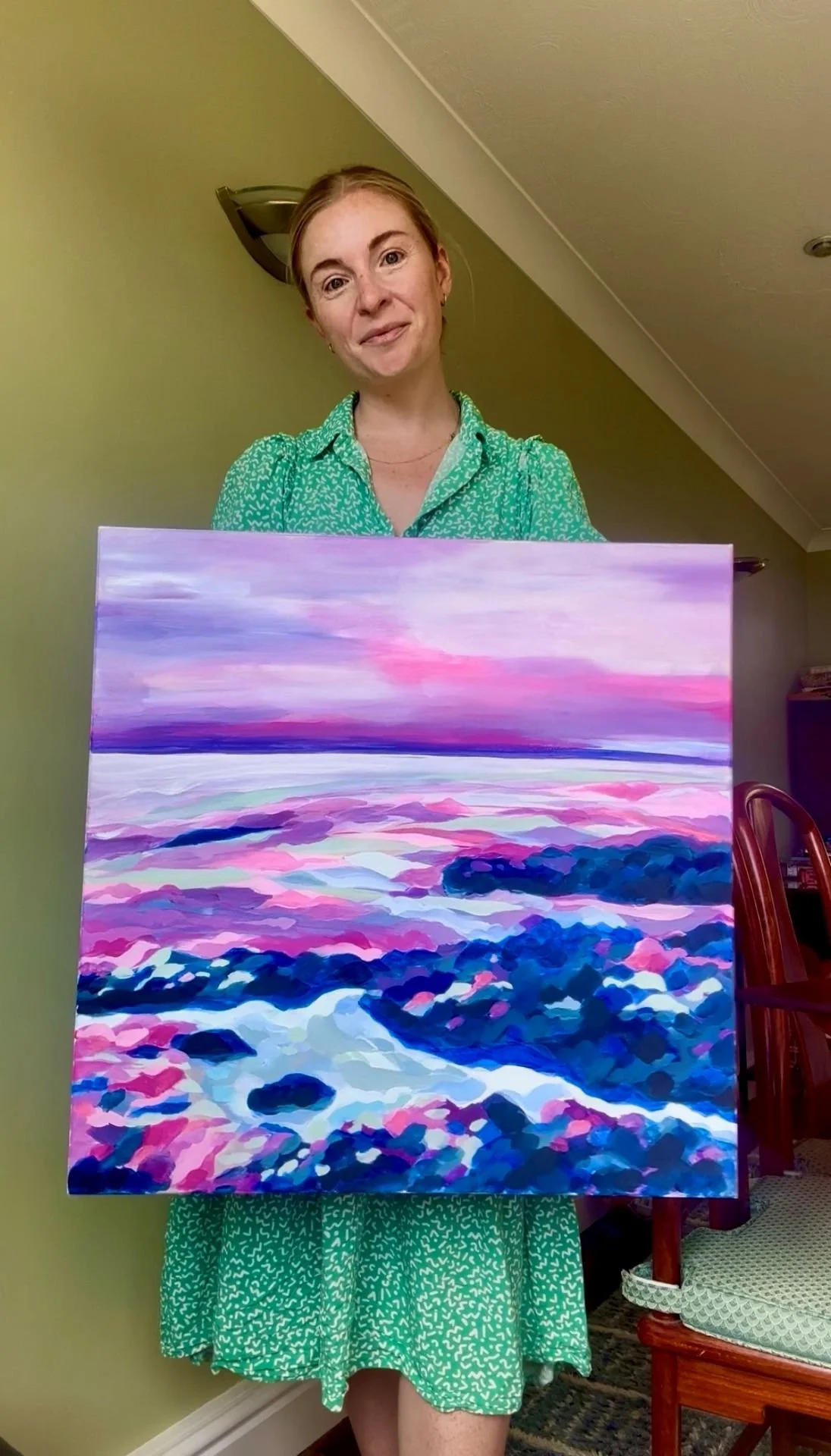
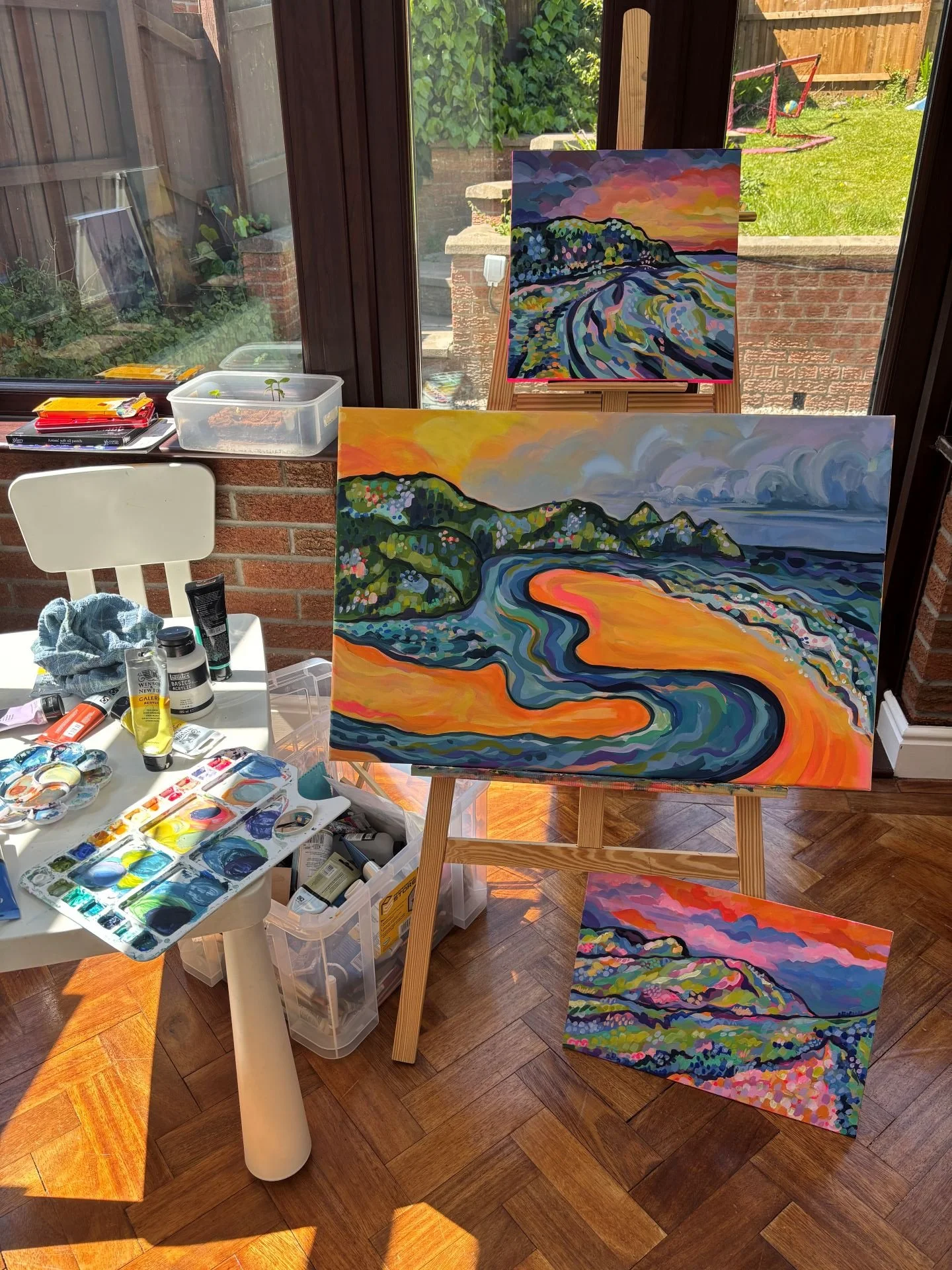
My “studio” is actually our conservatory, which is also the children’s playroom. There’s a full-size easel propped against the wall, a little IKEA children’s table that I use because it doesn’t matter if it gets covered in paint, and a large storage box where everything gets locked away when I’m finished. If you walked in while I was painting, you’d probably see paints spread everywhere, a ball pit, a play kitchen, toys, and a cup of coffee slowly going cold beside me. For about 95% of the day it doesn’t look like an art studio at all. I take everything out, make a complete mess, then pack it all away again when I’m finished. It’s not a romantic artist’s studio, but it’s very representative of this stage of my life.
Is there anything you like to listen to when creating?
I almost always have something on in the background. Sometimes it’s music, sometimes a podcast, and sometimes it’s unapologetically a reality TV show. I tend to need to be in quite a good headspace before I start painting, so the whole ritual matters: a nice coffee, something enjoyable playing in the background, and knowing I have a couple of uninterrupted hours ahead of me. Painting puts me into a real flow state where everything else disappears for a while. I stop thinking about work, parenting, the house and everything I need to do afterwards. For those few hours, I’m completely absorbed in what’s in front of me. And that feeling tends to stay with me for the rest of the day.
Where do you find inspiration for your work?
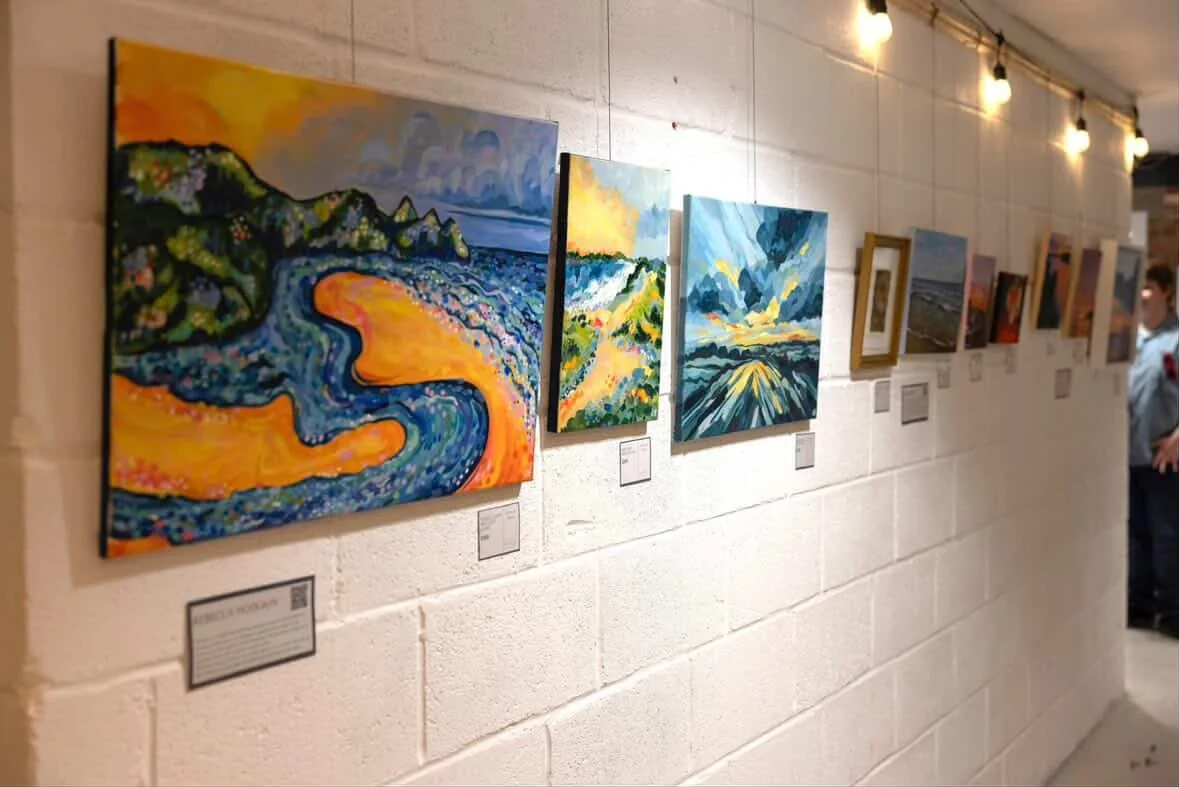
A lot of my visual inspiration comes from illustration, stationery, wrapping paper and craft design as much as traditional fine art. I love strong colour combinations, patterns, simplified shapes and unexpected contrasts. Places and memories are increasingly important too. I grew up in Hong Kong, and some of my illustration work reflects that world through dark backgrounds, angular city shapes and neon-like colour. My South Wales landscapes are almost the opposite: light, open, fluid and bright. But the use of strong colour and contrast connects the two. I also get a lot of ideas while walking, usually when I’m out with my children. Recently I’ve realised that I’m not necessarily interested in painting places exactly as they look. I’m much more interested in the emotional charge attached to them.
How do you start a new piece?
Usually with a reference photograph that gives me the basic composition of a landscape. I do most of the planning the night before. By the time I actually stand in front of the canvas the next morning, I’ve already been painting it in my head for hours. I usually begin with the sky and work quite instinctively from there. I’ll get the first layer down, put the painting aside, let it dry and then come back to assess where it needs more. The planning beforehand lets me be much more spontaneous once the actual painting starts.
Do you have a secret to knowing when a piece is finished?
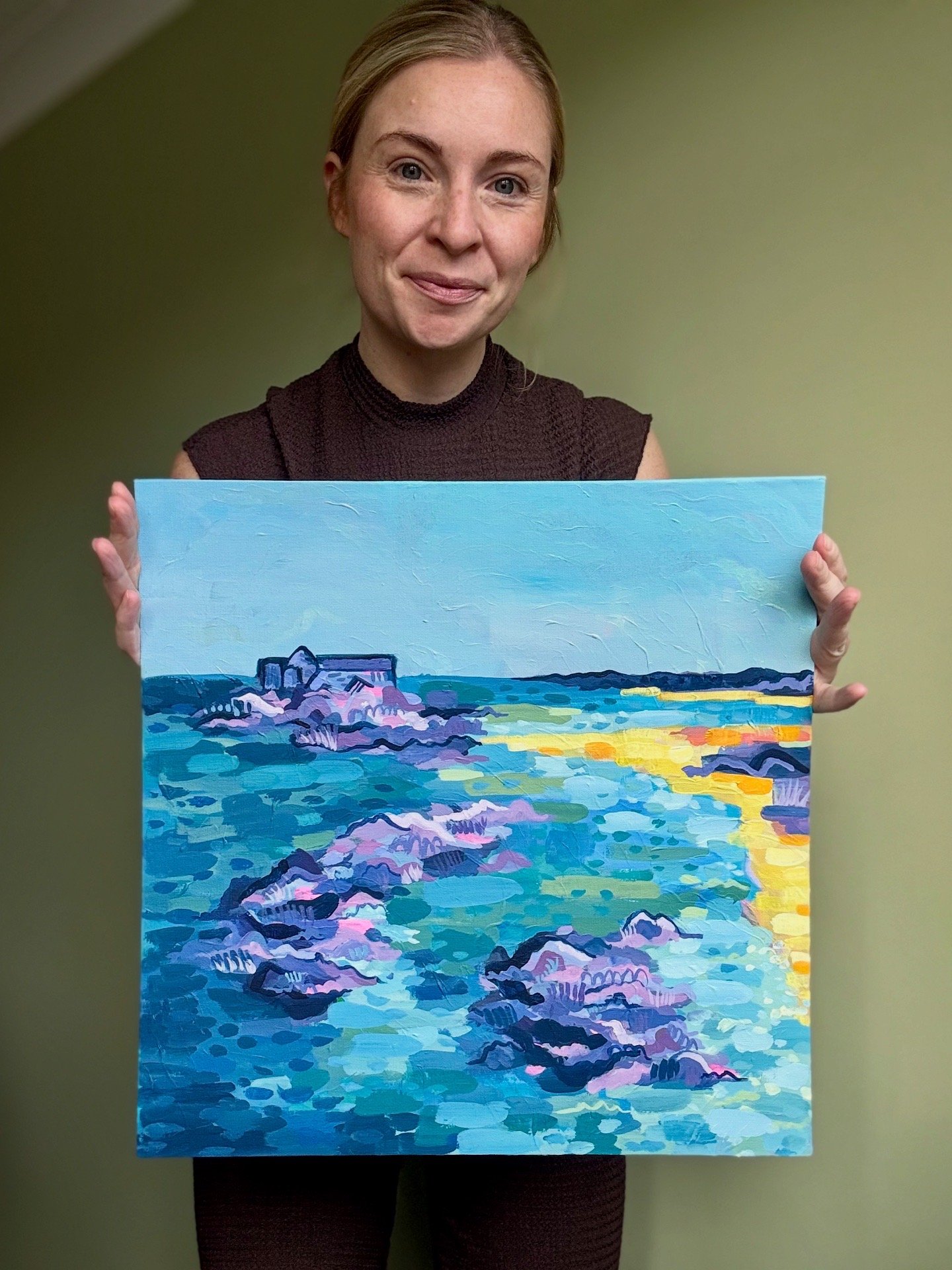
I’m still learning this! I think I’m becoming better at recognising the point where continuing to work on something isn’t necessarily going to improve it. Because I’m naturally quite perfectionistic, my temptation can be to keep refining. But painting is teaching me that sometimes the energy and immediacy of a piece are more important than polishing every element. There’s usually a point when I step away, look at it, and realise that anything else I add might just be me being nervous about stopping.
What are you working on at the moment?
I’m beginning my first intentionally developed body of work, centred around memories of summer in South Wales. This summer has felt particularly significant to me because it has been such a contrast to the previous one. Last summer was a difficult period where I felt quite stuck; this year I feel creatively energised and much more connected to myself. I’ve invited people across South Wales to submit memories from their summer — not just photographs, but sensory details: what they could smell, what they were holding, who they were with, how a place made them feel. One person told me about taking her two young boys to a beach in the Gower that she used to visit with her grandparents, who have since passed away. They ended up going into the sea with their clothes on. I loved that sense of generations folding into one another in the same place. My own son told me his favourite memory was camping with his best friends and roasting marshmallows. Immediately I could picture the firelight, the melting marshmallows, the smell of smoke and that flickering orange glow. Those are the fragments I want to paint. Eventually I’d love the collection to become a kind of memory map of a South Wales summer.
Do you have a favourite piece?
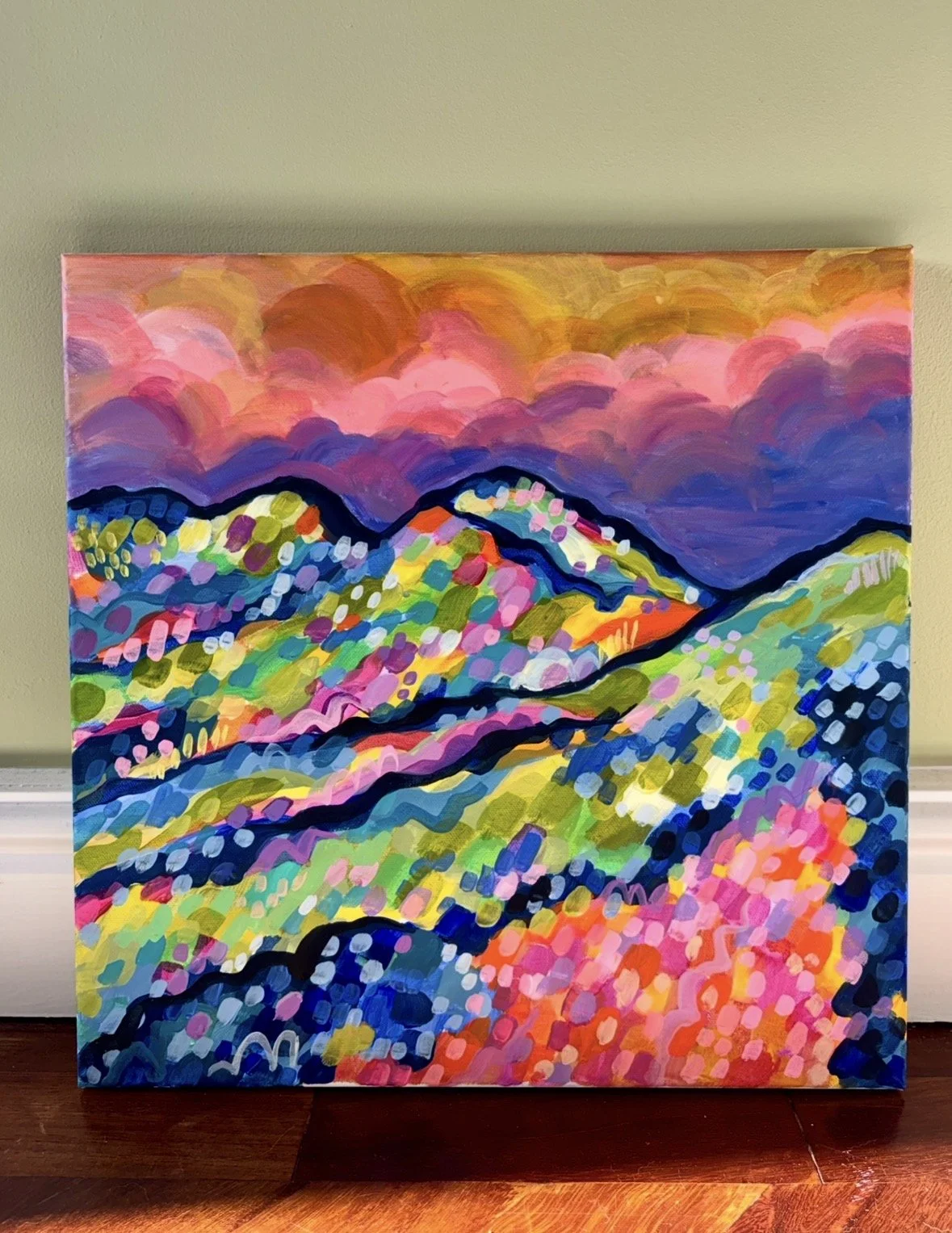
At the moment, it’s a painting called Pen y Fan. It came from a family day trip in our camper van. We drove past Pen y Fan with both of our boys. I haven’t actually climbed it since before having children, although I’ve always wanted to go back. So I thought: if I’m not climbing it today, I’m going to paint it instead. The painting sold but I painted a second iteration of it with different colours on a bigger size.
What advice do you have for artists who are wanting to start to share their work?
Just do it before you feel ready. I think coming from a marketing and design background actually helped me because I understood that sharing your work doesn’t have to mean declaring every piece a masterpiece. You can tell people that you’re learning. I remember sharing a painting on my Instagram Stories and literally saying, “I know I’ve already shown you this, but I don’t actually like it.” And that was okay. Social media has been incredibly helpful for me because it stopped everything feeling so all-or-nothing. Even if a painting wasn’t successful, I could share the process, what I learned, or simply document that I was continuing. You don’t have to wait until you’re “good enough” to show people what you’re doing. Let them see the journey.
Is there anything exciting on the horizon you'd like to shout about? Shows, launches, collaborations, or even something you're looking for help with... feel free to share here.
I’m really excited about developing my South Wales summer memory project into my first proper collection. I’d love to bring together around 100 memories from people across South Wales and use them as the starting point for a body of work exploring place, nostalgia, joy and belonging. Until now my paintings have mainly been landscapes without people or objects, so this project is also pushing me technically. I want to start introducing the objects that hold memories — a football, a camper van, a particular picnic blanket, an ice cream, a swimsuit pattern, marshmallows over a fire — and see how those can live within my existing visual language. Eventually, I’d love to find a Cardiff gallery or space to host it as my first solo collection and invite the people who contributed memories to come and see it. My hope is that people walk into the exhibition and recognise tiny parts of themselves — even in paintings based on somebody else’s memory. I want it to feel familiar. Like belonging.
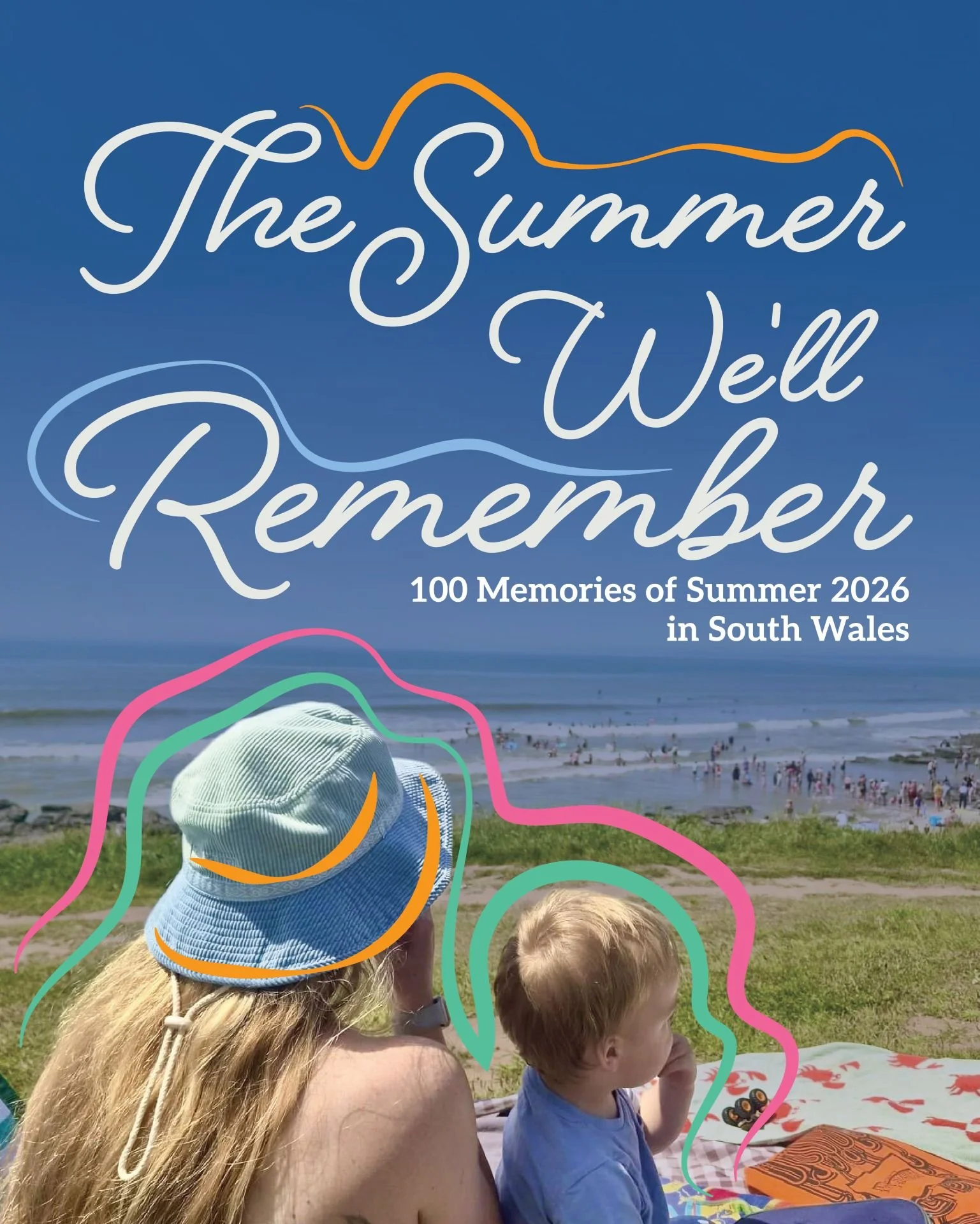
If you’d like to take part in Becky’s 100 Memories of Summer project, you can sign up here.
Follow Becky's journey on Instagram or visit her visit her Etsy shop
